Sleep & Bedding
How to Choose a Down Pillow for Your Sleep Position
A pillow is a small landscape beneath the head, but its height and give can shape the alignment of the neck and shoulders through the night. The best down pillow balances loft, softness, and support in a way that suits how you sleep—not just how it feels in the shop.
The search for a comfortable pillow often begins with a simple question: does it feel soft? Yet softness alone cannot tell you whether your head will rest at a useful height, whether your neck will feel supported, or whether the pillow will hold its shape until morning. The better question is how the pillow behaves under your weight, in your usual sleep position, with your mattress beneath you.
Down pillows are valued for their lightness and pliable comfort. They can compress and shift as you move, creating a responsive surface rather than a fixed block. But “down pillow” can describe different constructions, from pillows filled mostly with down to blends that include feathers for additional body. Understanding that distinction, along with loft, shell fabric, and care requirements, makes it easier to choose thoughtfully.
There is no single pillow height that suits every sleeper. Side, back, and stomach positions place the head and neck at different angles, while mattress firmness, shoulder width, and personal comfort preferences also matter. Use this guide to narrow your options, then treat the final choice as a practical fit test: your head should rest comfortably, your neck should feel supported, and the pillow should not force your body into a strained position.
Start with the position you actually sleep in
People often identify with one sleep position, but bodies travel during the night. You might fall asleep on your side, turn onto your back, and wake in a different position altogether. Begin with the posture you spend the most time in, then consider whether you need a pillow that can adapt when you shift.
The purpose of pillow loft is not simply to raise the head. It is to fill the space between the head and mattress without lifting or dropping the neck excessively. When that space is supported, the head can rest in a more neutral relationship with the upper spine. A pillow that is too high or too low may feel comfortable at first but become tiring over time.
Your mattress affects this fit. A softer mattress may allow the shoulder or upper body to sink farther into the bed, reducing the gap a pillow needs to fill. A firmer surface may leave more of that gap open. That is why the same pillow can feel different in two bedrooms—or even after changing mattresses.
Side sleepers: look for enough loft to fill the gap
When you lie on your side, the shoulder supports much of the body while the head rests above it. The distance between the mattress and the side of the head can be greater than it is when lying on your back. Many side sleepers therefore prefer a pillow with more loft or a fill that retains enough height to support that space.
A down pillow’s softness can be useful here because it can conform around the head rather than feeling rigid. Still, a pillow that compresses too much may leave the head tilted toward the mattress. Look for a pillow that feels yielding at the surface but does not collapse completely beneath your weight. The goal is a supported, comfortable position—not the tallest pillow on the shelf.
Shoulder width and mattress feel can change the amount of loft that feels right. A broader shoulder may create a larger gap, while a plush mattress may reduce it as the body sinks. If possible, test the pillow while lying on your own side. Notice whether your head seems level with your spine rather than angled sharply upward or downward.
If you change sides often, consider how readily the pillow recovers when you move. A responsive fill can be reshaped with a small adjustment, but a pillow that needs constant fluffing may interrupt your comfort. The useful measure is how it performs through ordinary movement, not only how it looks when freshly plumped.
Back sleepers: seek a moderate, adaptable profile
Back sleeping generally leaves less space between the head and mattress than side sleeping. Many back sleepers find that a medium or moderate loft supports the head without pushing the chin toward the chest. The exact preference varies with body shape, mattress firmness, and the pillow’s ability to compress.
A down or feather-and-down pillow can offer a softer, adjustable feel: it may settle around the head while still providing cushioning. When trying one, lie back in your usual position and pay attention to the angle of your face and neck. If your head feels tipped forward, the pillow may be too high or too full for your needs. If it seems to sink until the head is nearly flat, you may want more retained loft.
Comfort is personal, and posture cannot be judged by a label alone. A “medium” pillow from one maker may feel quite different from another because fill composition, fill amount, shell fabric, and construction all influence how it compresses. Evaluate the pillow’s behavior rather than relying on its name or a general rating.
Stomach sleepers: consider a low, soft pillow
For many stomach sleepers, a high pillow can lift the head too far from the mattress. A lower, softer profile may feel more natural, because it adds less height beneath the face. Some people who sleep on their stomach prefer a very thin pillow or none, depending on comfort and habit.
Down’s compressibility can be an advantage if you prefer a pillow that gives way under light pressure. But a thick, overfilled pillow may still feel awkward, even when its surface is soft. Try pressing gently into the center and notice how much the pillow yields. Then test it in your usual sleeping posture rather than judging it by hand alone.
If you move between stomach and side sleeping, a very low pillow may not provide enough height when you turn. In that case, consider whether one adaptable pillow is comfortable across both positions or whether a different shape or loft better matches your movement. A good choice is the one that works through your real night, not a position you hold only briefly.
Understand down, feathers, and blended fills
Down and feathers are related but not identical materials. Down consists of the soft clusters found beneath a bird’s outer feathers; it is light and known for its insulating qualities. Feathers have a more defined structure and can contribute a firmer, more substantial feel. Many pillows combine the two to balance softness with body.
A pillow made with a high proportion of down may feel exceptionally light and pliable. A blend containing more feathers may feel firmer or more supportive to some sleepers, though the result depends on the pillow’s total fill and construction. Neither description guarantees a particular loft. Fill amount, chamber design, shell, and how the contents are distributed all affect the finished pillow.
Consider the label carefully. It should make clear what the filling contains, and the product information should explain care and any relevant sourcing or certification details. If you have a sensitivity to animal-derived materials, check the full specifications and consult a healthcare professional where appropriate. A pillow’s outer feel alone does not reveal everything about its contents.
One available example is the Down Pillow, described as having a 100% cotton shell and a fill of 90% feathers and 10% down. Its listed support is medium, and the product information describes it as breathable and washable. Those details offer a starting point for comparison; whether the pillow’s loft and feel suit you still depends on your sleep position and preferences.
Loft is not the same as firmness
Loft describes a pillow’s height or thickness. Firmness describes how resistant it feels when pressure is applied. The two qualities are related in use, but one does not automatically predict the other. A pillow can look lofty yet compress easily, or appear relatively low while feeling dense.
When comparing down pillows, consider both the height at rest and the amount of support that remains once your head is on it. A side sleeper may need a pillow that keeps more of its height under load, while a stomach sleeper may prefer one that compresses readily. Back sleepers often look for a middle ground, but individual needs differ.
Product terms such as “soft,” “medium,” or “firm” are useful only as broad guides. If buying in person, lie down for several minutes in your normal posture. If shopping online, review the fill composition, stated support level, return policy, and detailed care instructions. A clear description is more valuable than a dramatic promise about perfect sleep.
The shell fabric matters, too
The shell is the fabric that contains the fill. It affects the pillow’s surface feel, breathability, durability, and ability to keep the filling inside. A closely woven shell may help reduce the escape of fine fill, while the hand of the fabric contributes to how smooth or crisp the pillow feels against the face.
Cotton is a common choice because it is familiar, breathable, and suitable for everyday bedding. Pay attention to the construction and care guidance rather than assuming that fiber content alone tells the whole story. A well-made shell should feel comfortable, hold its seams, and work with a pillow protector if you use one.
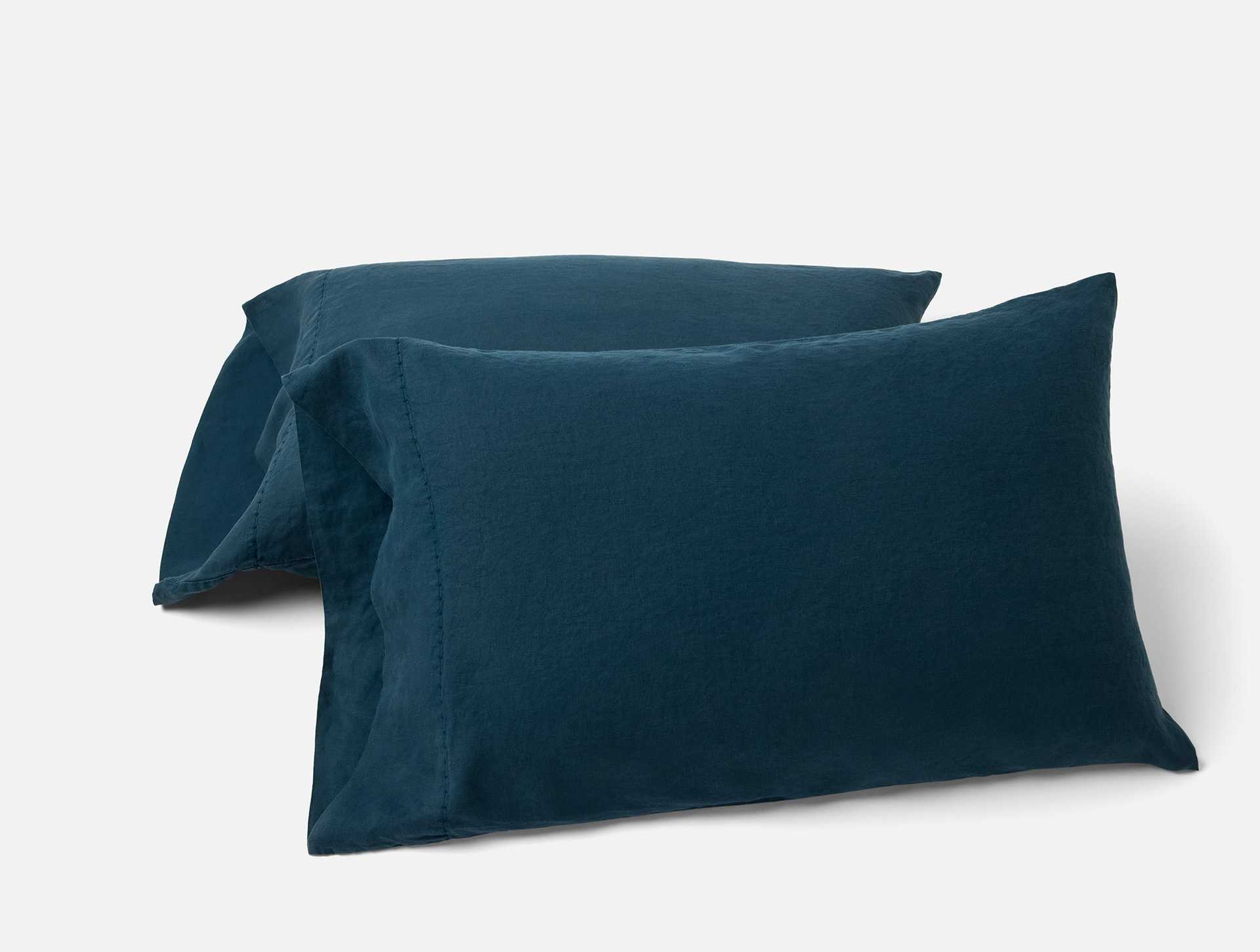
A pillowcase adds another layer between the shell and your skin. It can influence surface softness and make routine laundering easier, but it cannot compensate for the wrong loft. Choose a case that fits without compressing the pillow into a tight, distorted shape.
Breathability and temperature preferences
Sleep comfort is shaped by the whole bed environment: room temperature, bedding layers, clothing, and individual warmth preferences. A breathable shell and a fill that does not feel overly dense may help the pillow feel more comfortable, but no material can guarantee that every sleeper will stay cool.
Down is often associated with insulation because it traps air, yet a pillow’s warmth depends on its construction and how it is used. If you tend to sleep warm, look for product details about shell fabric and fill, and think about whether a pillow protector or thick pillowcase adds unwanted warmth. If you prefer a cozier surface, a more substantial pillow may feel reassuring.
The practical test is how the pillow feels after several hours, not only during a brief first touch. If you wake often because the pillow feels warm or clammy, review the entire bedding arrangement. The pillow may be one part of the equation, alongside room ventilation and the warmth of sheets and blankets.
Care affects comfort over time
A pillow is used nightly and can collect moisture, body oils, and dust. A removable pillow protector can help shield it from everyday soil, while a washable pillowcase makes routine care more straightforward. Follow the care label for the pillow itself: down and feather products may have specific washing and drying requirements.
Do not assume that a pillow is machine washable simply because its description says “washable.” Confirm the recommended water temperature, cycle, detergent, and drying method. Inadequate drying can leave fill damp, while unsuitable washing may affect the shell or redistribute the contents. If the label is unclear, ask the manufacturer or a qualified retailer before laundering.
Between washes, follow any instructions for airing or fluffing. Gentle redistribution can help a pillow regain its shape, especially if the fill has shifted during sleep. Avoid aggressive beating or heat unless the care guidance specifically allows it. Small, consistent habits can help maintain a more even surface.
Care expectations should be part of the buying decision. A pillow that requires more attention may be worthwhile if its feel suits you, but it should fit your household routine. Check whether the product can be cleaned at home, whether professional care is advised, and how a protector may affect comfort.
A simple pillow-buying checklist
Before choosing, compare the details that influence the pillow in actual use. A few practical questions can bring the decision into focus:
- What is your usual sleep position? Start with the posture you spend the most time in, while accounting for movement during the night.
- How much height do you need? Consider the space between your head and mattress, your shoulder width, and how much your mattress lets you sink.
- What is the fill composition? Check whether the pillow is filled with down, feathers, or a blend, and note the stated proportions.
- How does it compress? A pillow should yield enough for comfort but provide the level of support you need in your sleeping position.
- What is the shell made from? Review the fabric, construction, and how it is expected to hold the fill.
- Can you care for it as directed? Read washing, drying, and maintenance instructions before purchase.
- Can you test or return it? A trial or return option can be valuable when comfort depends on how the pillow behaves at home.
If you can test a pillow, bring your decision back to the body. Lie in your usual position, relax your shoulders, and notice whether your head settles without strain. Give yourself time to assess how the pillow feels rather than deciding from its appearance or from a quick squeeze.
Common mistakes to avoid
A frequent mistake is choosing the softest pillow without checking its loft. Softness can feel appealing at first, but if the pillow collapses too far, it may not provide the height you need. The opposite mistake is choosing a very full pillow because it looks supportive, then finding that it pushes the head into an uncomfortable angle.
Another is treating sleep position as the only factor. The mattress beneath you, your build, and your tendency to change positions all influence the fit. A product description can narrow the field, but it cannot account perfectly for every person’s body or bedroom.
Finally, do not overlook care and composition. Buying a pillow without understanding what is inside it or how it should be maintained can lead to avoidable frustration. Take a moment to read the specifications, particularly if you have material sensitivities or prefer a low-maintenance bedding routine.
The right pillow is a personal fit
The best down pillow is not necessarily the fullest, softest, or most expensive. It is the one whose loft and compressibility work with your sleep position, mattress, and comfort preferences. Side sleepers often begin by looking for enough retained height; back sleepers may prefer a moderate profile; stomach sleepers commonly explore lower, softer options. These are starting points, not rules.
Look beyond a pillow’s first impression. Compare the fill, shell, support description, and care instructions, then test the pillow in the posture you actually use. When the head settles comfortably and the neck feels supported without being forced into position, the pillow is doing its quiet work—helping the bed feel less like an object and more like a place the body can rest.